
Northern Thailand
Chiang Mai
Chiang Mai is northern Thailand's cultural base, surrounded by mountains, with hundreds of temples, craft villages and a slower pace than Bangkok. It suits culture, craft, food and wellness creators. November to February is cool and clear; late in the dry season, roughly February to April, smoke haze can badly affect visibility and air quality.
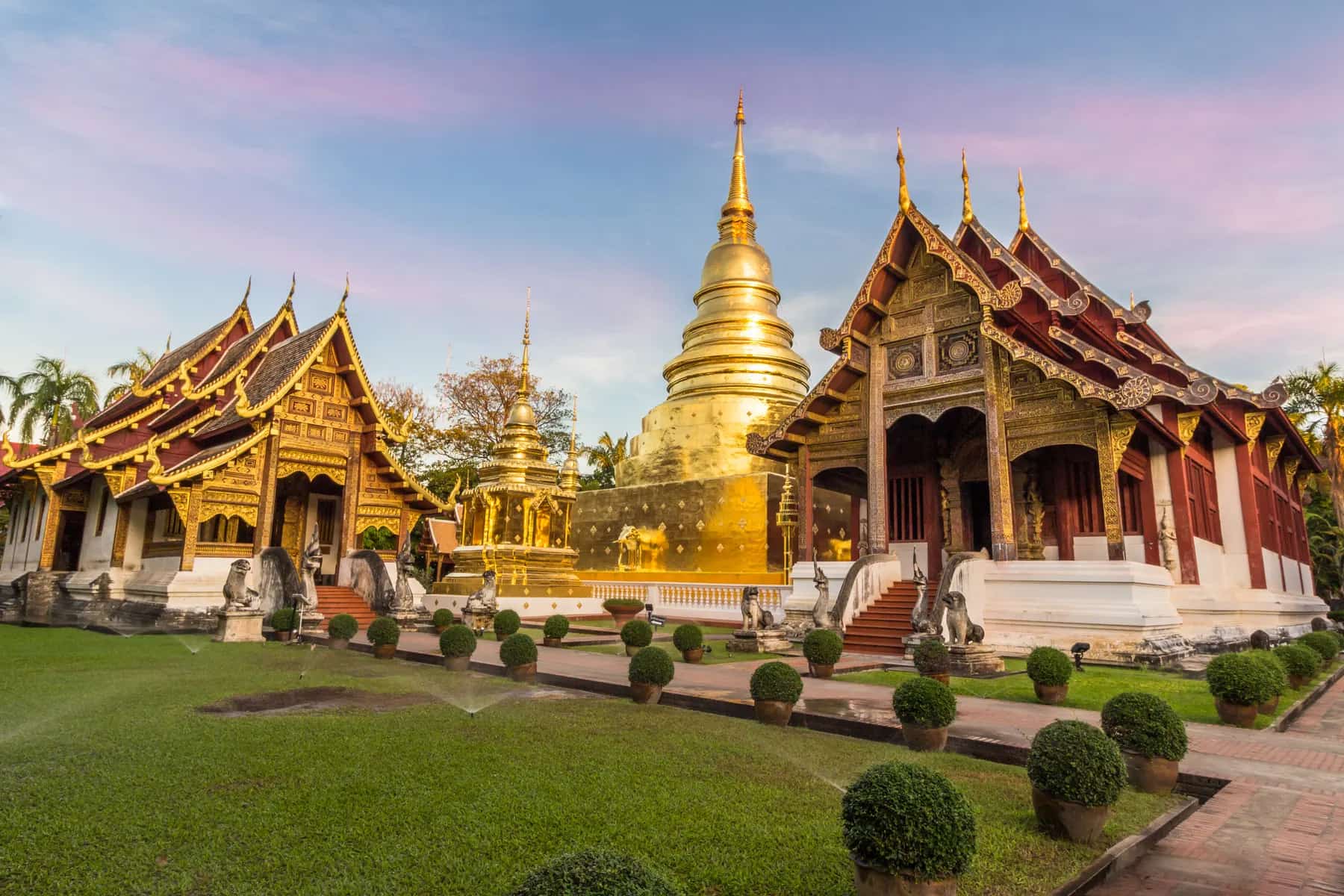
Wat Phra Singh, Chiang Mai
When is the best time to film in Chiang Mai?
The best time to film in Chiang Mai is November to February: cool mornings, clear air and green hills after the rains. Mornings in the mountains can be genuinely cold, so pack a warm layer. The lantern festival (Yi Peng) and Loy Krathong fall in November on dates set by the lunar calendar, and hotels fill early.
From about February to April, agricultural burning can bring heavy haze that flattens the light and hides the mountains. Air quality can be poor enough to affect your health, so check readings before you commit to dates. The rainy season, from around June to October, is lush and quieter, with rice fields at their greenest, but mountain roads and waterfall trails get slippery.
Which shots work best in Chiang Mai?
The shots that work best in Chiang Mai mix temple architecture, craft and mountain landscapes, and they suit a slower edit than Bangkok.
- Wat Chedi Luang, the ruined chedi in the old city, and Wat Phra Singh for classic Lanna temple architecture
- Wat Phra That Doi Suthep on the mountain above the city, reached by a long naga staircase, with the view over Chiang Mai on a clear day
- Wat Umong, a forest temple with tunnels, quieter and cooler than the old-city temples
- The old-city moat and gates, especially Tha Phae Gate in early light
- Craft villages to the east, around Bo Sang for painted paper umbrellas and San Kamphaeng for weaving
- The Sunday walking street inside the old city, and the Saturday walking street on Wualai Road, known for silverwork
- Doi Inthanon, Thailand's highest mountain, for cloud forest, waterfalls and the two royal chedis
- Mountain villages and coffee farms, where the pace and the light are slower
What does a hosted day in Chiang Mai look like?
A hosted day in Chiang Mai often starts with a temple and ends with food. A typical shape is an early drive up Doi Suthep before the crowds and the heat, a late morning in a craft workshop filming makers at work and trying the technique yourself, a break at the hotel, and an evening at a market or a northern dinner if it is part of the plan. Countryside days, to the mountains or Doi Inthanon, start earlier and run longer because of the driving.
Workshops are filmed with the maker's permission and explained by the people who do the work. That is what makes culture content from the north land with an audience.
Getting around Chiang Mai
Getting around Chiang Mai is easy in the old city and slower everywhere else. The airport is close to the centre. Most hosted trips arrive by domestic flight from Bangkok, which you book and pay for yourself; the overnight train from Bangkok is a slower option that films well. Transfers from the airport and to activities in the countryside are in a private vehicle. Inside the old city, walking is often fastest, and red songthaews (shared pick-up trucks) are the local way around. Mountain roads are steep and winding, so allow time and plan breaks if you get motion sickness.
Etiquette and filming rules in Chiang Mai
- Temple dress codes apply everywhere: shoulders and knees covered, shoes off in buildings. Some temples ask women not to enter certain areas; follow the signs.
- Monks are often photographed; ask first, keep a respectful distance, and women should not touch a monk. Some temples run informal monk chats, where the conversation is the point, not the camera.
- Lantern releases are regulated and restricted, especially near the airport flight path. Only film a release at an organised, permitted event on its official date.
- If you film elephants, audiences scrutinise welfare closely. Riding and performances will draw criticism; at a sanctuary, show how the animals are kept, not only the feeding shots.
- Hill-tribe villages are homes, not sets. Ask before filming people, and do not pay children to pose.
- Drone flying near temples, the old city and the airport is restricted; check the current rules before flying anywhere.
How Chiang Mai fits a multi-stop trip
Chiang Mai is the northern leg of most multi-stop trips in Thailand. The classic route is Bangkok first, a short flight north, then south to the islands for the second half, for example Krabi between November and April. Wellness creators often pair Chiang Mai's hills with Koh Samui. Each flight is your cost; the hosted parts of every base sit in one itinerary. When you have dates, apply.
Ready to apply for Chiang Mai?
The application saves as you go, and every applicant hears back within 5 business days.
Updated